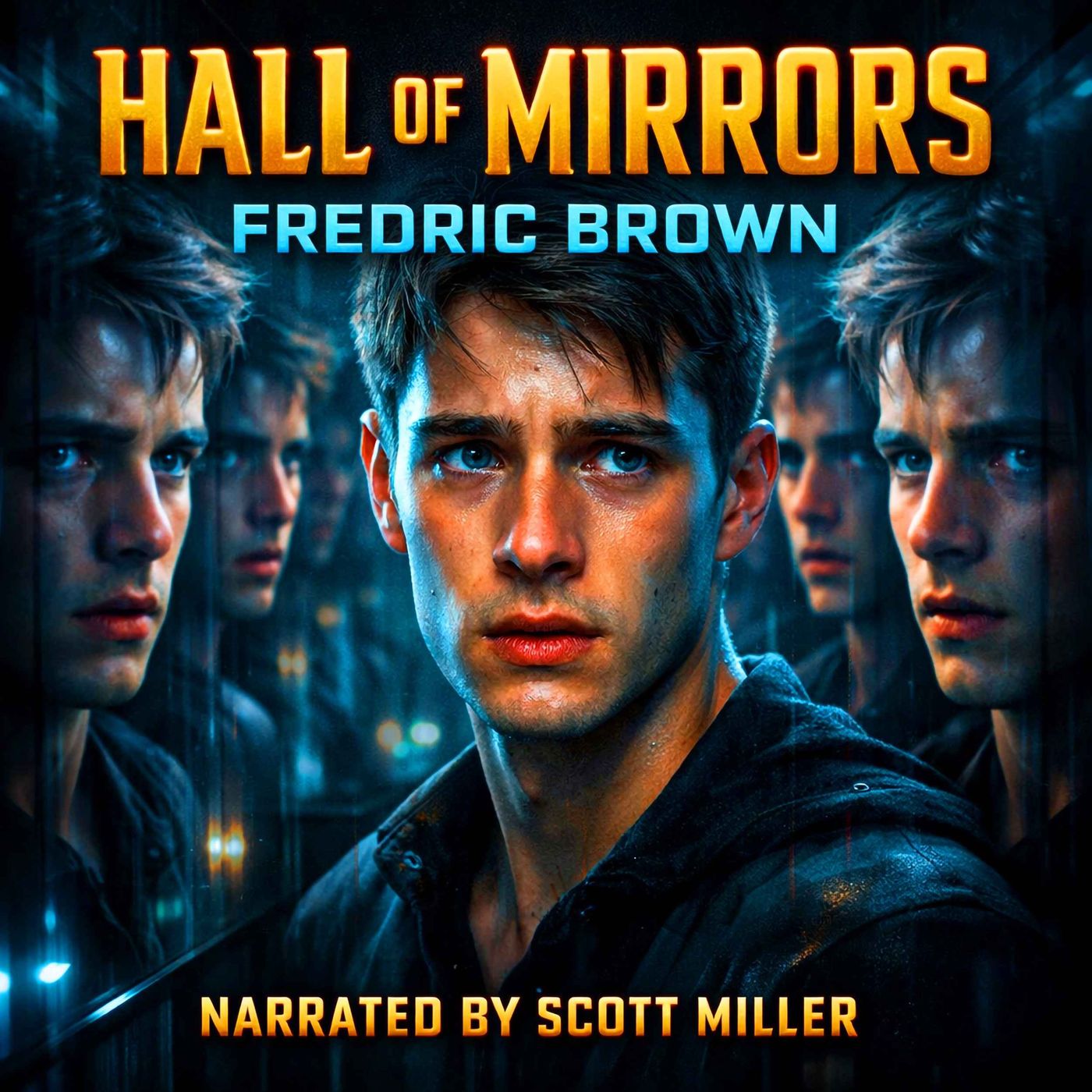
Hall of Mirrors
A quiet moment collapses without warning, and Norman Hastings finds himself standing in a room that should not exist, wearing a life that is no longer his. Everything around him suggests care, preparation, and intent—but none of it explains why he has been removed from his own time and stripped of the years that once defined him.
As Norman learns what has been done to him, the problem grows sharper rather than clearer. The technology responsible does not move people through history the way fantasies promise. It restores the body by erasing the years it has lived. Illness can be undone. Death can be delayed. But memory, love, and loss do not come back with it.
What remains is a single responsibility no one else can carry. Norman must decide whether this discovery should ever reach the world, knowing that its promise could save countless lives—or quietly unravel civilization if used without restraint. The door will open soon. Once it does, the future will repeat only if he allows it.
Fredric Brown was a master of compact science fiction whose stories appeared frequently in Astounding Science Fiction, Galaxy, and Weird Tales during the 1940s and 1950s. He wrote hundreds of short stories across science fiction, mystery, and suspense, often delivering complete moral and emotional confrontations in only a few pages. Brown is also known for novels such as What Mad Universe and The Lights in the Sky Are Stars, both of which reflect his talent for grounding speculative ideas in immediate human consequences. “Hall of Mirrors” stands as a precise example of his ability to trap a single character inside an inescapable decision—and make the listener feel every narrowing step.
Listen to Hall of Mirrors by Fredric Brown — a vintage science fiction short story where youth can be reclaimed—but only by erasing a lifetime.