The Cold Equations
A routine emergency mission becomes an unforgiving test of physics, law, and human conscience. When one hidden mistake is discovered, a pilot must face a decision that no training could ever prepare him for.
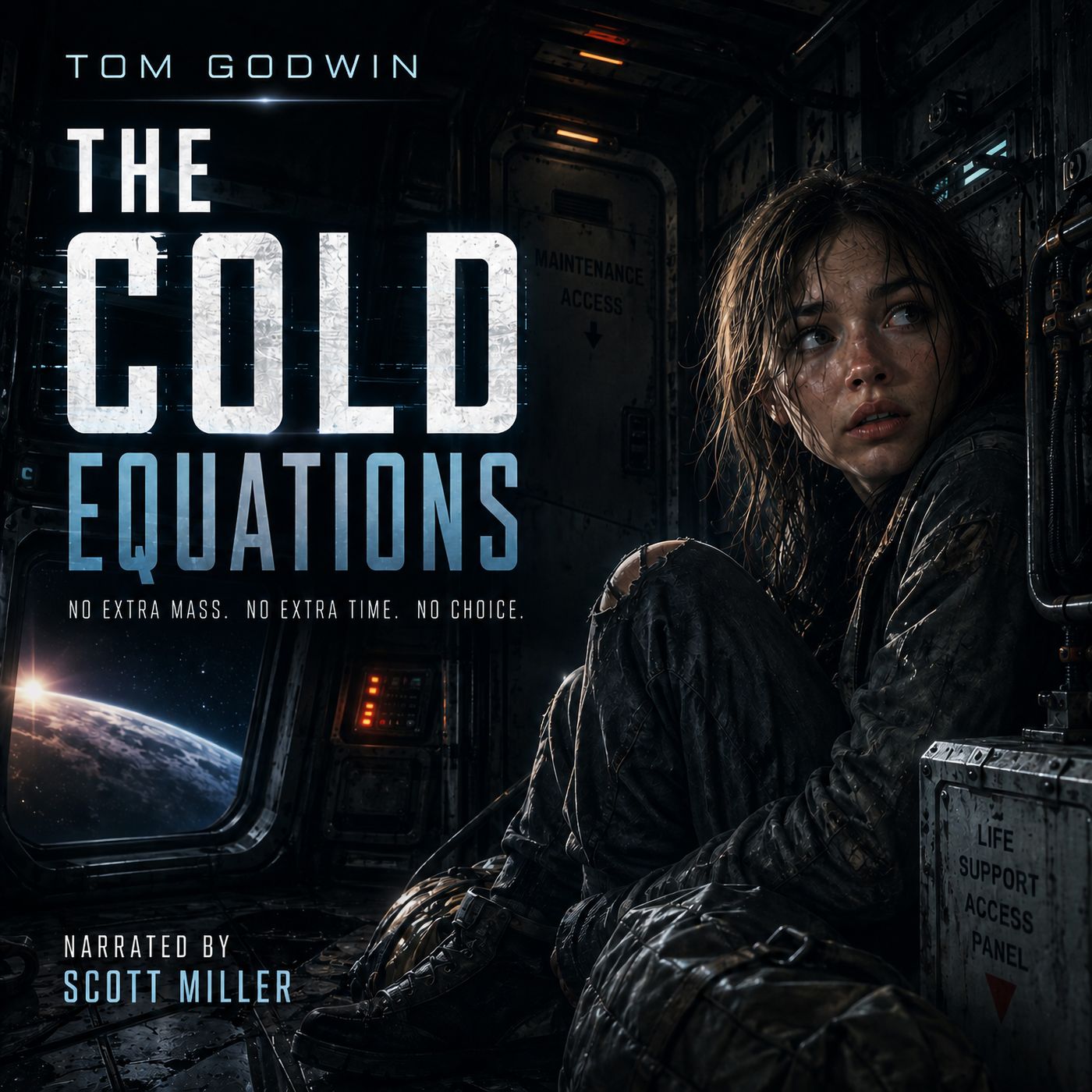
The frontier does not forgive mistakes. In The Cold Equations, an Emergency Dispatch Ship races toward a distant planet carrying life-saving serum. The ship is engineered with ruthless precision. Its fuel, mass, and trajectory are calculated to exact limits. Nothing extra is allowed.
When the pilot discovers an unexpected stowaway, the mission changes instantly. Physics does not recognize innocence or intention. The pilot is forced to confront a terrible reality. He can follow the laws that keep others alive, or allow sentiment to doom everyone. This is not a story about villains or heroes. It is a story about consequences.
Godwin presents the problem without melodrama. The tension comes from inevitability, not spectacle. Each moment is shaped by time, distance, and fuel. Every decision narrows the remaining options. The result is one of science fiction’s most haunting ethical dilemmas. Readers are left to judge the universe, not the characters.
Tom Godwin was deeply interested in realism and consequence. His stories focused on humanity at the edge of survival. He believed science fiction should respect physical law. Comforting fantasies held little interest for him. Published in 1954, The Cold Equations became controversial. Some praised its honesty. Others questioned its severity. Decades later, it remains a defining example of hard science fiction.
Godwin’s work challenges readers to face uncomfortable truths. His legacy is built on refusing easy answers.
Listen to The Cold Equations by Tom Godwin — a landmark vintage science fiction short story where physics, law, and survival collide without mercy.
Next on The Lost Sci-Fi Podcast, Guy Burckhardt wakes from a violent dream to find his town subtly—but profoundly—wrong. As June 15th repeats itself, he begins to realize that reality itself may be manufactured. The Tunnel Under the World by Frederik Pohl.