Yesterday Was Monday
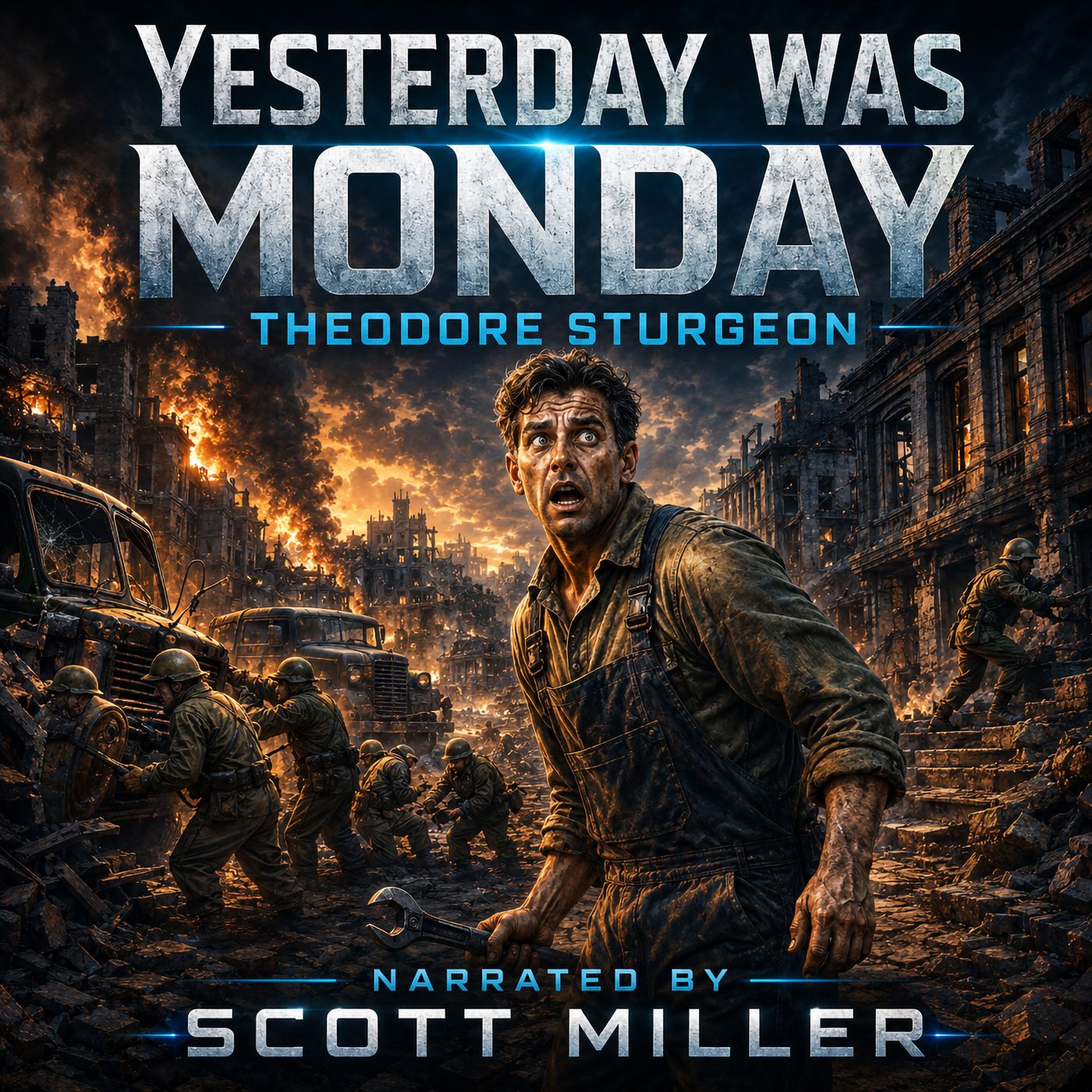
Harry Wright expects grease, gears, and a predictable week. Instead, he wakes to find that Tuesday has slipped out from under him and Wednesday is already being assembled. The city feels familiar, but something is off. The scratches on the stairs look freshly carved. The dust on the cars looks deliberately applied.
Before long, Harry sees the truth. Armies of small workers are building the day as if it were scenery. Supervisors speak of acts and cues. A calm, unnerving authority explains that time is not flowing forward at all—it is being prepared in advance, set by set. Harry is not meant to see behind the curtain. When he does, he is treated less like a man and more like a performer who wandered off script.
The wonder of the discovery quickly turns into pressure. If the week is a constructed path and each person is following written lines, then any misstep carries consequences. Harry’s attempt to fix a missing day pulls him through control rooms, backstage corridors, and a place where old sets are torn down and recycled. Getting back to his life will not be as simple as walking through a door.
The story moves with humor, but it never lets the tension slacken. The world Harry thought he understood turns out to be managed with obsessive care. Whether he can return to his role without disturbing the larger production becomes the question that drives the final stretch.
Theodore Sturgeon (1918–1985) published “Yesterday Was Monday” in Unknown, the influential fantasy magazine edited by John W. Campbell. Over the next decades he became a central figure in speculative fiction, contributing frequently to magazines such as Astounding Science Fiction and building a reputation for character-driven, emotionally resonant stories. His novel More Than Human won the International Fantasy Award, and he later wrote the landmark Star Trek episode “Amok Time,” introducing elements that became permanent parts of the franchise. Sturgeon’s fiction often places ordinary people in contact with unsettling ideas, then follows them closely as they struggle to respond. “Yesterday Was Monday” showcases that talent with wit, scale, and a quietly disorienting premise.
Listen to Yesterday Was Monday by Theodore Sturgeon — a vintage science fiction short story where a mechanic discovers the week is being built like a stage set.
Next on The Lost Sci-Fi Podcast, He was one man, horribly confused, escaping from a destroyed planet, carrying some sort of message which he couldn't recall. But he had tremendous potential for achievement! Potential by Robert Sheckley.